


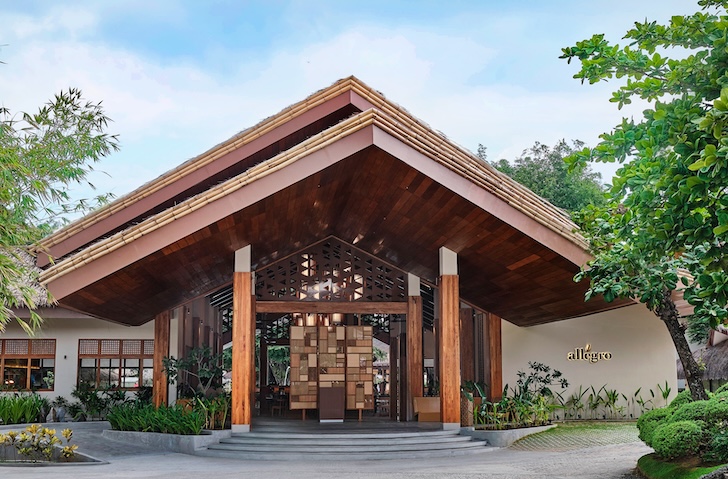
The 37th anniversary of Maribago Bluewater and the reopening of its expanded Allegro restaurant deserve more than just an accolade. It should be seen as a testament to one of Cebu’s hospitality icons and as a measure of dedication, resilience and the ability to move forward while remaining true to its roots.
In a video message, Julie Alegrado Vergara, president of Almont Holdings, the mother company of Bluewater Resorts, spoke of the history of its flagship property.
“Tonight we celebrate the opening of Allegro, but more than that we celebrate something deeper. For nearly four decades, Allegro has been part of countless family gatherings, quiet celebrations, reunions with old friends and moments that they carry with them long after the meal has ended,” she said.
“These memories remind us that a restaurant is never just about food. It is about bringing people together.”
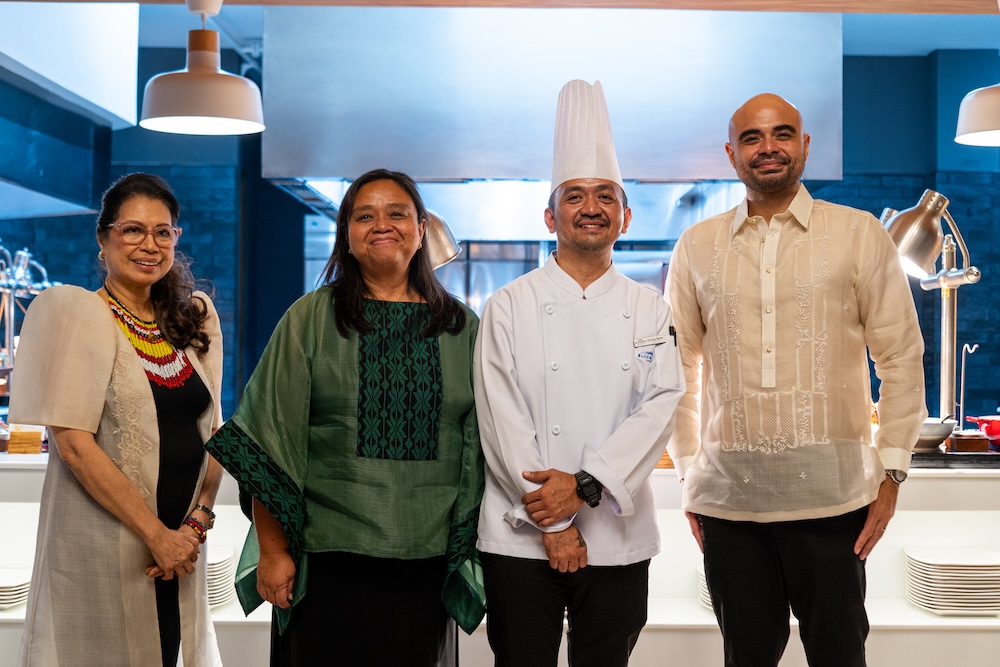
Allegro: A fresh expression of Filipino hospitality
Indeed, Allegro, the resort’s all-day dining outlet, has been a go-to culinary destination for many tourists visiting Bluewater Maribago. Through the years, its appeal has remained in the combination of familiar bestsellers and new creations.
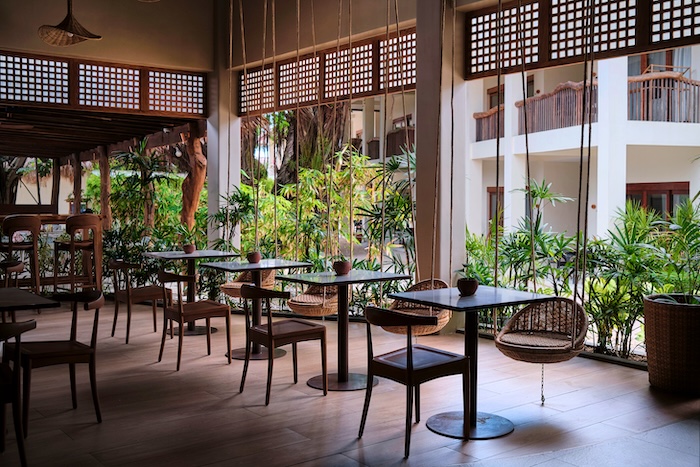
Now, the restaurant has been given a new look and a more expansive dining experience, with space for 106 guests. The architectural design was created by Aidea, while the interiors bring a distinctly Filipino character through the use of local materials and design elements.
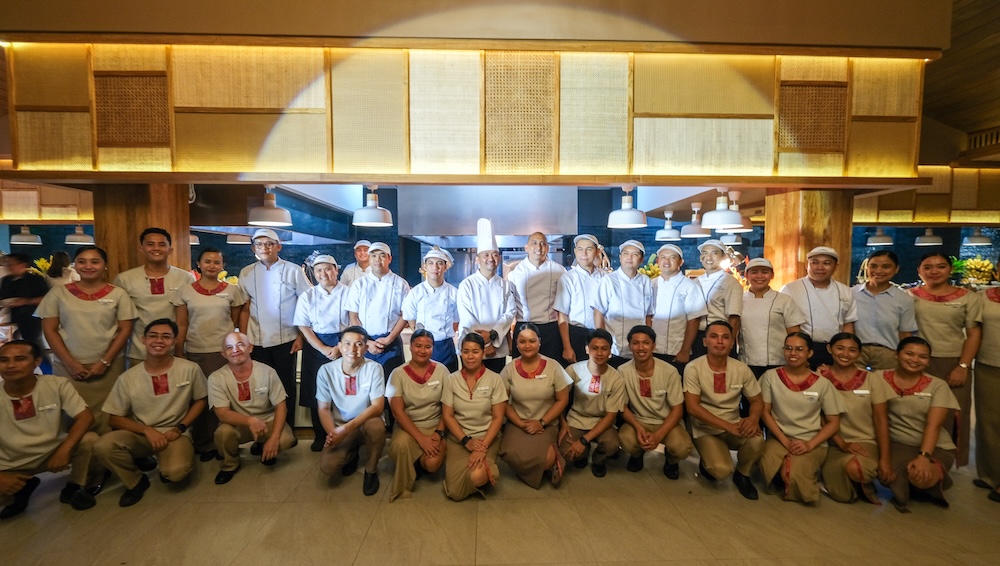
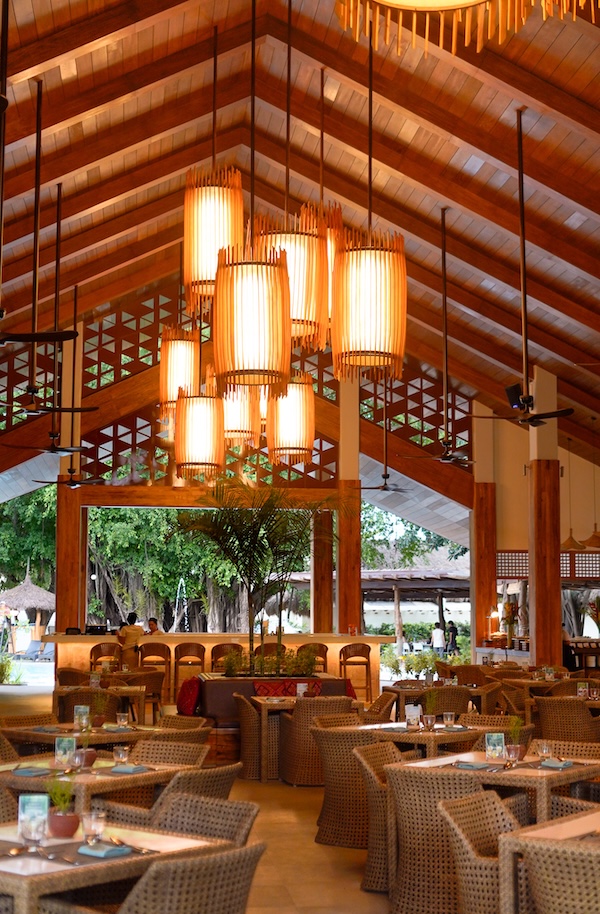 Capiz shells lend a soft, natural quality to the interiors, while local weaves incorporated into the walls add texture and a strong sense of place. Fan-shaped ceiling lamps provide another Filipino-inspired detail. An open kitchen also brings the culinary action closer to diners, allowing guests to see the kitchen team at work.
The restaurant is divided into an air-conditioned dining area and a non-air-conditioned, open-air section, giving guests the option of enjoying their meal in cool indoor comfort or with the island breeze.
The redesign extends beyond the dining room, with a refreshed lagoon-style pool surrounded by lush tropical gardens and mature balete trees. Together, the spaces create a more inviting setting for family meals, celebrations and gatherings.
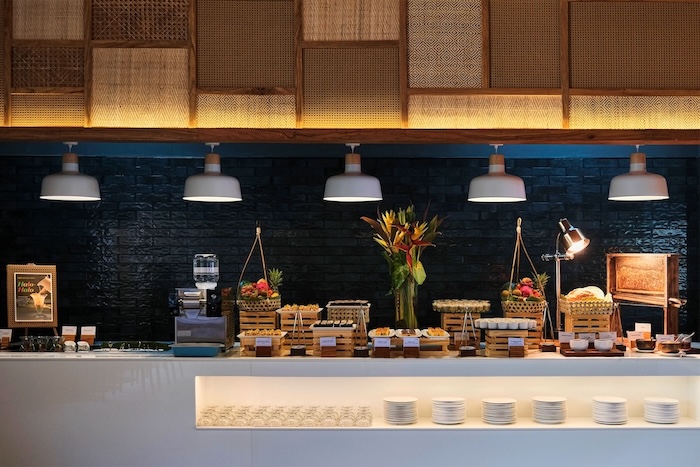 Yet for all the changes, there are things at Allegro that remain reassuringly familiar.
The juices are fresh—as in pulp-bits-fresh. Sikwate, the traditional hot chocolate drink, is still served with suman, while there is always something new to savor at breakfast.
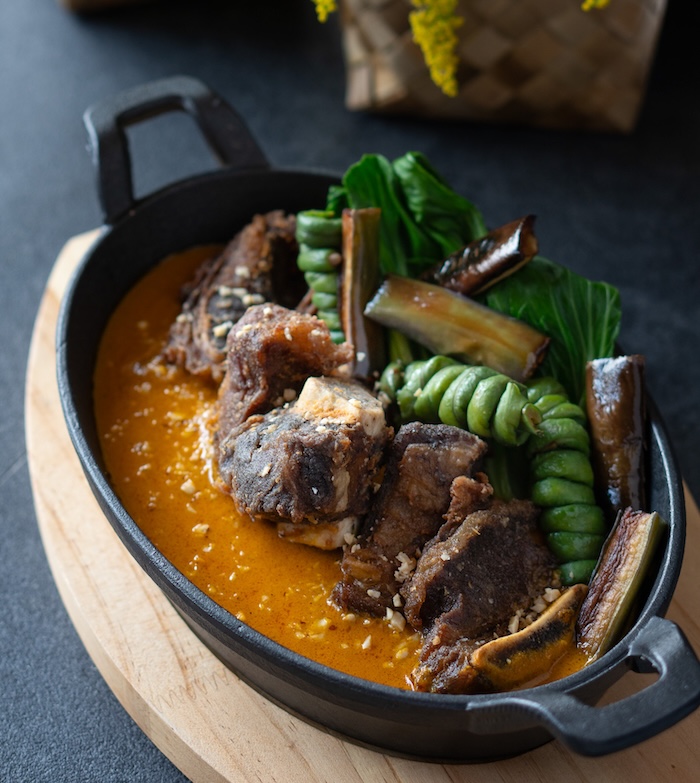
The refreshed menu also puts Filipino cuisine firmly in the spotlight, bringing together beloved classics, regional specialties and contemporary creations. Among the dishes are Manok Bisaya Tinola, Pinalutong na Tadyang Kare-Kare, Garlic Butter Baby Squid, Bagnet Binagoongan and Shrimp Asado Cuapao.
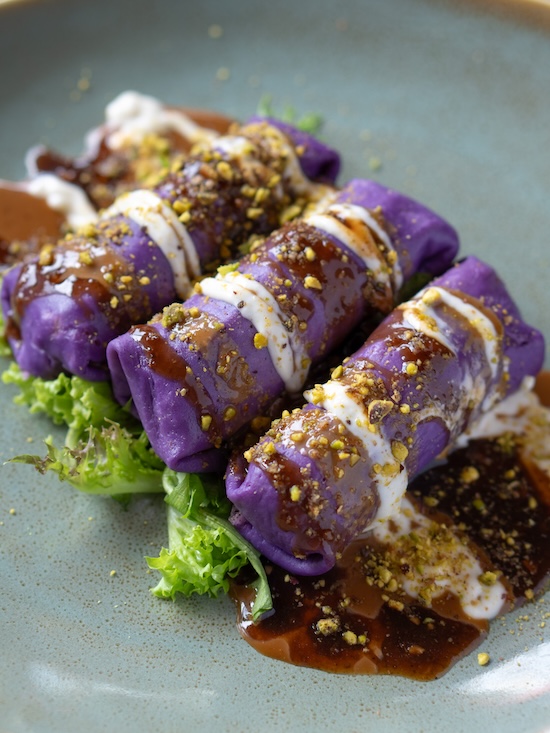
The Filipino dessert tradition gets its own showcase, with Cassava Turon, Cabcab with Latik, Pandesal with Ube Jam and a live Halo-Halo station.
Much of the produce, seafood and other ingredients are sourced from local farmers, fishermen and artisans, reinforcing the restaurant’s connection to local communities and Philippine culinary traditions.
 For Executive Chef Gerwin Bailon, however, the connection goes beyond ingredients and recipes.
“For us, Amuma is more than hospitality—it’s how we cook,” he said. “It means preparing every meal with respect for our ingredients, our traditions, and the people we welcome to our table.”
Making a restaurant a destination is a tough act to follow, considering that Cebu is a culinary haven, with foodie hotspots seemingly on every corner.
“It is good that we still make a small profit from food. Other hotels don’t anymore. Some hotels don’t even include meals when they sell rooms because tourists go out,” shared Domiku Ugarte, general manager of Bluewater Maribago.
“We have loyal members that partake of the food here, especially on weekends when their relatives visit from abroad. They bring the whole clan,” related Margie Munsayac, vice president for marketing of Bluewater Resorts.
Resilience
Amid preparations for the celebration, I talked to Rhyz Buac, vice president for finance and operations of Almont Holdings and Alenter Resort Hotels (Bluewater Maribago), about resilience and the company’s ability to bounce back from various local and global concerns.
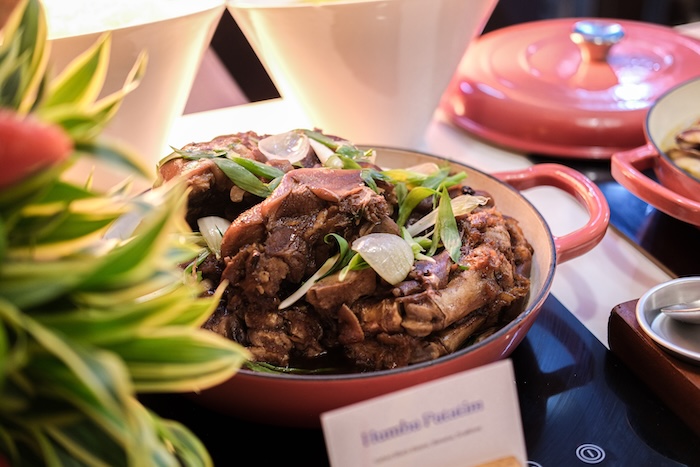 The conversation took place over truffle oysters, lobster and other dishes prepared by Chef Gerwin Bailon.
“The mid-rise of 65 rooms was set to open in November 2020, but because of the COVID lockdowns, it was delayed up to 2024. We only financed that internally; we did not borrow money, so that became a concern, but we managed to weather that,” Buac said.
“The way I look at it, even if the conflict is resolved, it will take two to three years more to get to pre-pandemic levels, as we had Typhoon Odette that devastated Cebu, then the earthquake, and now, the Middle East crisis,” he added.
Buac also addressed the issue of why Maribago has chosen not to build high-rises like some of its neighbors.
“If you will look at the ratio of the size of our property to the potential number of rooms we can build, it will be huge, but we feel that the quality of the rooms will suffer,” he said.
“This is the only beach we have and we want our guests to enjoy their stay. We can build a hundred rooms more, but how do we accommodate them in the beach area?”
Amuma — A Response to the Challenge to Serve
The mantra of Amuma is the cornerstone of Maribago’s corporate philosophy.
Amuma is an old Visayan word meaning “aruga”—to care for or nurture.
“That was the name of the spa. We took it already as our core value as it speaks of our commitment and pledge to our guests when they come here. We already embraced it, and it is not anymore a marketing slogan,” Munsayac explained.
This mindfulness can be felt especially in the restaurant, where the waitstaff remain attentive to guests and assist them through a variety of gastronomic experiences.
 “It is part of our culture. It still needs training, though it is not hard to train our people because Filipinos are inherently very hospitable. Just put a little refinement in all aspects. It is the story of a Filipino and we want this to carry on,” Munsayac said.
A trait to remember and practice, but carrying the hospitality tenet is not a one-size-fits-all mindset that Maribago can simply instill in new employees.
When asked why some employees leave, Ugarte explained, “It’s trial and error on who fits the culture best. Sometimes, they are really good during interviews, but when they start work after a few weeks or months, you can already see that they are not fit culturally. It’s a balancing act.”
“We’re trying to find a middle ground, build a better culture where people are happy working for us, to feel that they are part of something, to be part of the growth of the resort, to find pride.
 “We are doing trainings for them, and we always tell them that they can level up, to be more ambitious, and we support the selected ones with outside trainings,” he added.
Ugarte admits that, ultimately, it may also be about the money.
“They want to go abroad for higher pay. They want to level up fast, so much that if it is not within their pace, they leave.”
He said the resort sets expectations from the beginning while also demanding more from its people.
“So whenever they come in, we give them expectations, but we demand more, unlike the others where management is lax but no room for progress, and they regret it in the end. Sometimes they come back.”
Looking Ahead
Bluewater Maribago started out well in the first half of the year, recording 88 percent occupancy during the first six months, supported by foreign arrivals, MICE and staycations from domestic tourists.
The resort hopes to maintain this figure, although foreign tourists usually book their vacations well in advance.
Technology is also becoming an increasingly important part of the operation.
 “Technology is getting better and more efficient and grows fast. It will be painful when we transition because we have to learn it, the new system, but eventually, after that pain, it will be smooth sailing,” Ugarte said.
The resort is now working toward an integrated, all-in-one system. While it remains heavily reliant on online travel agencies, the goal is also to encourage more guests to book directly with the resort.
Government support in attracting tourists remains another important factor.
“We hope the present situation improves. Government intervention is important. We hope the new DOT Secretary delivers what she is committed to in terms of foreign arrivals and the fulfillment of the NTDP,” Ugarte said.
For Bluewater Maribago, 37 years is therefore not simply a celebration of what has been achieved. It is a continuing test of how a homegrown resort can evolve, withstand challenges and remain relevant.
The new Allegro is perhaps a fitting expression of that journey: a refreshed space, a renewed appreciation of Filipino food and design, and a familiar table where generations of guests can continue to gather.


